



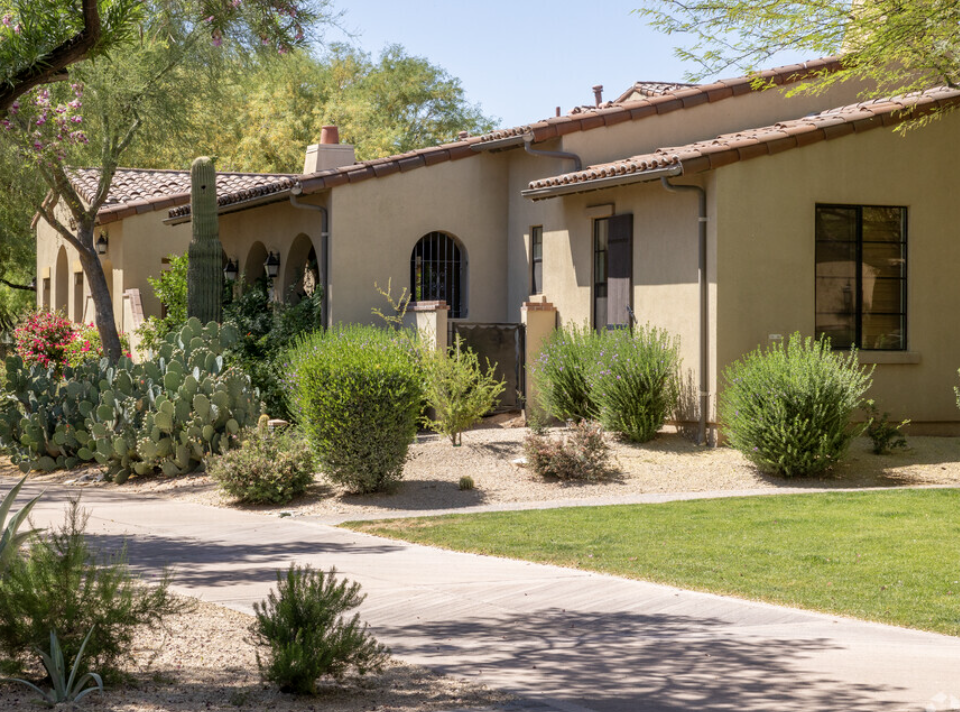
Last year, more than 52,000 Californians packed up and moved to Arizona — the largest single migration corridor between any two states in the country. They came for the math: a flat 2.5% income tax instead of California's top rate of 13.3%, a median home price near $321,000 instead of $660,000, and a kind of breathing room that has become hard to find west of the Sierras. The story has been told so many times now it has the shape of folklore. California sunshine without California prices. A reasonable mortgage. A backyard.
The case for Arizona.
The financial argument is genuinely compelling.
Let's start with the numbers, because the numbers are the reason most people are doing this. A household earning $200,000 in California pays roughly $18,000 a year in state income tax. The same household in Arizona pays $5,000. That's $13,000 a year staying in your pocket — or, framed differently, the entire annual cost of a mid-range private school. For a household at $400,000, the gap widens to more than $40,000 annually. Arizona has no estate tax. No inheritance tax. Property taxes average 0.62% of assessed value, well below the national average of 0.99%.
Then there's housing. The median California home now costs roughly twice the median Arizona home. A family selling a 1,400-square-foot bungalow in Glendale or a 1960s ranch in Burbank can land in Chandler or Gilbert with a 3,200-square-foot home, a pool, a three-car garage, and meaningful cash left over. Roughly a third of California-to-Arizona movers buy a home in their first year. Try doing that in Los Angeles.
The economy is no longer a punch line.
Arizona used to be a place you retired to. It is now a place you build a career in. TSMC is investing $165 billion in its Phoenix semiconductor campus — the largest foreign direct investment in U.S. history. Intel is expanding its Chandler operation. The Valley has added ten Fortune 500 companies in recent years. Trade, healthcare, and professional services have grown into a dense, diversified job market that increasingly resembles the Bay Area circa 2005, before everything became unaffordable.
The lifestyle dividend is real (most of the year).
From October through April, Arizona is something close to perfect. Seventy-degree mornings. Cactus-flower desert. Hiking trails that begin at the end of suburban streets. Resort-grade amenities in places that are not, technically, resorts. Old Town Scottsdale, North Phoenix, and Sedona have built a kind of indoor-outdoor culture that rewards the way many Californians already prefer to live. You eat outside. You hike on Saturdays. You drive an hour and find yourself in red rock country.
The financial argument is the loudest argument. It is not the only argument that matters.
The case against.
The summer is not a metaphor.
This is the one outsiders consistently underestimate. In 2024, Phoenix recorded seventy days at or above 110 degrees. That is not a weather event. That is two and a half months of weather you cannot meaningfully be outside in. The summer of 2025 was the fourth-hottest on record. From late May through early October, life is conducted in air-conditioned bursts: the dash from car to grocery store, the early-morning walk completed before 7 a.m., the children kept indoors. Pool water reaches bathtub temperatures. Pets cannot walk on pavement. Power bills run $400 to $700 a month.
Most people who move can adapt. Some never do. The Californians I've spoken to who returned all cited the same breaking point: the first July when they realized this was not a season they were enduring but a way of life they had agreed to. However, if you have the means to go back and rent an airbnb by the beach or travel to the mountains or out of the country for the summer, than you'll have the best of both worlds. It's also helpful to know that Flagstaff is only 2 1/2 hours away and is a solid 30 degrees cooler and a fun mountain town with a lively downtown, golf, hiking, fishing and shopping.
If you plan on staying through your summers and not traveling, I suggest you rent for one full summer before you buy. Visit in mid-July, not in March. The Arizona that exists in March is not the same Arizona that exists in August, and the latter is the one you'll be paying a mortgage on.
An honest ledger.
WHAT YOU GAIN
- Income tax savings of $10K–$50K annually, depending on bracket
- Roughly half the housing cost for double the square footage
- No estate or inheritance tax
- A genuine, growing job market in tech and healthcare
- Eight months of beautiful weather
- Proximity to Sedona, the Grand Canyon, and the Sonoran Desert
- A pace of life that is — for now — meaningfully calmer
WHAT YOU GIVE UP
- The ocean, and everything the ocean implies
- Four months of weather you cannot live in
- Mild summers — and the kind of evenings that made the rent feel almost worth it
Who should make the move.
After a year of these conversations, I've come to believe the move makes sense for a few clearly defined groups. Remote workers whose income is tied to coastal markets but whose lives don't have to be. Families with school-aged children, where the housing math compounds — better house, better yard, more left over for college. Retirees in good health, particularly those whose social lives are built around dry heat, golf, and low-key outdoor living. And entrepreneurs whose effective tax rate is the difference between scaling a business and not.
Considering making the move.. then hire the right team.
Sandra Mccullough - Associate Real Estate Broker is licensed in both Arizona and California and owns homes in both states. She has over 18 years experience in both markets. She grew up in the Arcadia neighborhood of Phoenix and was one of the many Phoenicians that made their way for most school vacations and in her later years with her own kids and family to California. When most of her friends were buying beach houses in California, Sandra was there to represent them and when the other group of friends that grew up in California decided to make a move to Arizona it was the perfect transtion using Sandra. 1 Agent, 1 Company for 2 states.
The Lifestyle Living Team powered by The Agency has offices in:
Scottsdale serving Maricopa County
Newport Beach serving Orange County
La Jolla serving San Diego County.
Start a Discovery Call with us and we can share the details of how it works to buy / sell interstate.